

- Innovation - Environment and sustainable development
Pioneering processes and climate action
The real-world solutions that ÐӰÉԭ´´ is developing to address climate challenges range from civil engineering works for underground storage tanks to clean up a canal in New York, to harnessing geothermal energy in a hospital in northern France, and on to processing thousands of tonnes of excavated rock to supply the Lyon–Turin rail line base tunnel project with aggregate.
ÐӰÉԭ´´ is acting for the climate on three levels: best practices and construction methods it is already applying at worksites to optimise resource use, solutions in its innovation pipeline, broader changes to its trades, products, services and solutions.
The projects below show this approach in action around the world.
Factoring in carbon impact starting at the design stage
The first – and vital – step towards lowering a building’s carbon emissions is to choose the right materials and energy systems. Energy performance was a key consideration on the project in northern France, and the local public hospital group chose to heat and cool most of this 618-bed, 83,100 sq. metre complex with geothermal energy. The goal is to cover 82% of the hospital’s energy needs with renewable sources.

The same approach applies to the choice of materials. At the new hospital on the , for instance, 90% of the concrete that ÐӰÉԭ´´ is using across seven buildings is from the range of low-, very-low- and ultra-low-carbon concrete, developed in-house since 2020 to significantly reduce CO₂ emissions during production. ·¡³æ±â® concrete accounted for 74% of the concrete ÐӰÉԭ´´ used on its building projects in France in 2025, and the target is 90% worldwide by 2030.
ÐӰÉԭ´´’s array of innovative carbon-reduction methods and solutions enables it to integrate environmental considerations more comprehensively into some projects. The wastewater treatment facility in Canberra (being built by Ìý²¹²ԻåÌý) in Australia is a case in point: the site office is powered entirely by renewable energy, the project is using low-carbon concrete and reusing 90% of the materials on site, and all construction operations use recycled water. The new membrane bioreactor will add capacity to treat 97 megalitres of wastewater a day using an advanced membrane treatment technology.

Reusing and recycling to turn waste into worksite resources
On some projects, innovation also involves including material recovery as an integral part of the operation.
Tunnelling several kilometres, for example on the base tunnel project, produces millions of tonnes of spoil – and a consortium led by Eurovia Alpes was awarded an €800 million contract to manage the 23 million tonnes of excavated material on the French side. The goal is to reuse more than 50% of this spoil directly on the project as aggregate for the concrete used to build the base tunnel and the platform for the new train station at Saint-Jean-de-Maurienne, and as railway sub-ballast. The system comprises three processing plants, eight logistics hubs and a rail loading site. The first processing plant, at Illaz, was inaugurated in October 2025.
The objective is to manage the worksite as one integrated cross-border operation. The strategy to do that, devised by TELT (the company responsible for delivering the rail line), covers four workstreams: maximising material recovery, applied research and development of logistics technologies (in cooperation with research institutes and universities), digital traceability, and material recovery on both sides of the border. The goal, here, is to overcome national regulatory constraints to be able to reuse materials regardless of whether they were excavated in France or Italy.
“Every tonne we reuse is a tonne we don’t need to buy – and also reduces pressure on resources in an area that already has an aggregate shortage.”
Road construction projects are also reusing materials. In the United Kingdom, Eurovia is building Green Aggregates, an advanced reclaimed asphalt processing facility in Thurrock (Essex).
Deconstruction can also open up opportunities. In France, for instance, the deconstruction operation that in Ingrandes-sur-Vienne, western France, included recycling 4,200 tonnes of materials. Once the project is completed, the site will feature an energy park combining a solar PV array and a green hydrogen production plant – a full-circle process from deconstruction to clean energy generation.
Preserving and restoring: building for and with nature
The climate transition also involves making communities and infrastructure assets more resilient through project that integrate nature from the start rather than treat it as an afterthought. In New Zealand, (11.5 km, 4 lanes). The route crosses a protected wetland on an eco-friendly viaduct designed to limit the project’s impact on ecosystems. Other environmental measures on an exceptional scale included introducing 1.8 million native plants, restoring 4.5 km of waterwaysÌý²¹²ԻåÌýrelocating 3,000 fish.
In cities, as temperatures are rising, climate resilience starts at street level. In France, Eurovia developed , which combines light-coloured, permeable surfaces (that absorb less heat and allow more rainwater to seep in) with engineered soils and increased vegetation. This solution has been used in five French departments since 2025 – Pyrénées-Atlantiques in south-west France, Charente-Maritime on the Atlantic coast, Morbihan in Brittany, Alpes-Maritimes in the south-east and Yvelines near Paris – and on the Montpellier tram Line 5 construction project.
Repairing is another aspect of resilience. In North Carolina, repaired U.S. Route 64, which was severely damaged by Hurricane Helene, by reinforcing the banks with rockfill and retaining walls, protecting the slopes with shotcrete and restoring the drainage systems – a practical example of climate resilience in action.
Lastly, in New York, and its subsidiary are leveraging their civil engineering expertise to improve water quality in a large city: they are building a 20,000 sq. metre diaphragm wall along the Gowanus Canal in Brooklyn, for one of two underground storage tanks in the federal Superfund canal clean-up programme. During heavy rainfall, the tanks will intercept wastewater before it can overflow into the canal, helping to protect water quality for local residents over the long term.
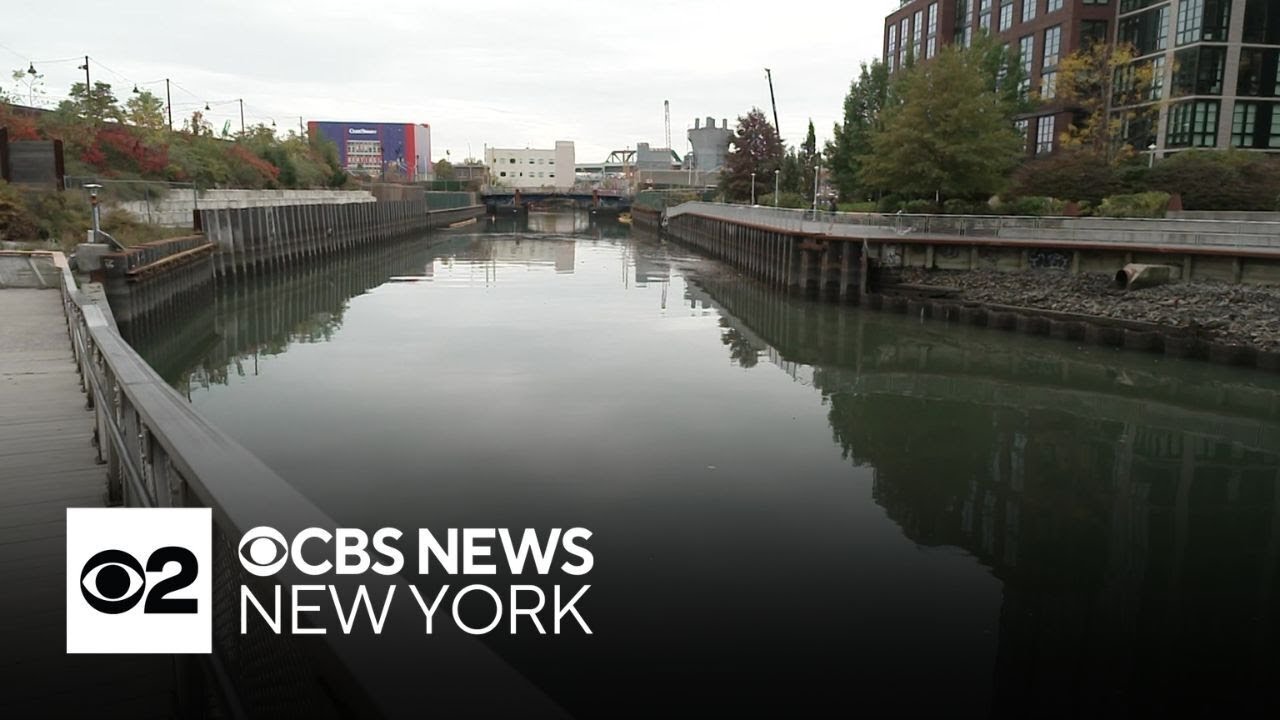
The Gowanus project in Brooklyn, New York
ÐӰÉԭ´´ projects around the world – in Lens, Canberra, Thurrock, Auckland, Brooklyn, Savoie and beyond – share the same focus: reducing infrastructure’s carbon impact, reusing resources and reinforcing resilience in the areas around them. These innovative, practical solutions are helping to address climate change while creating lasting value.